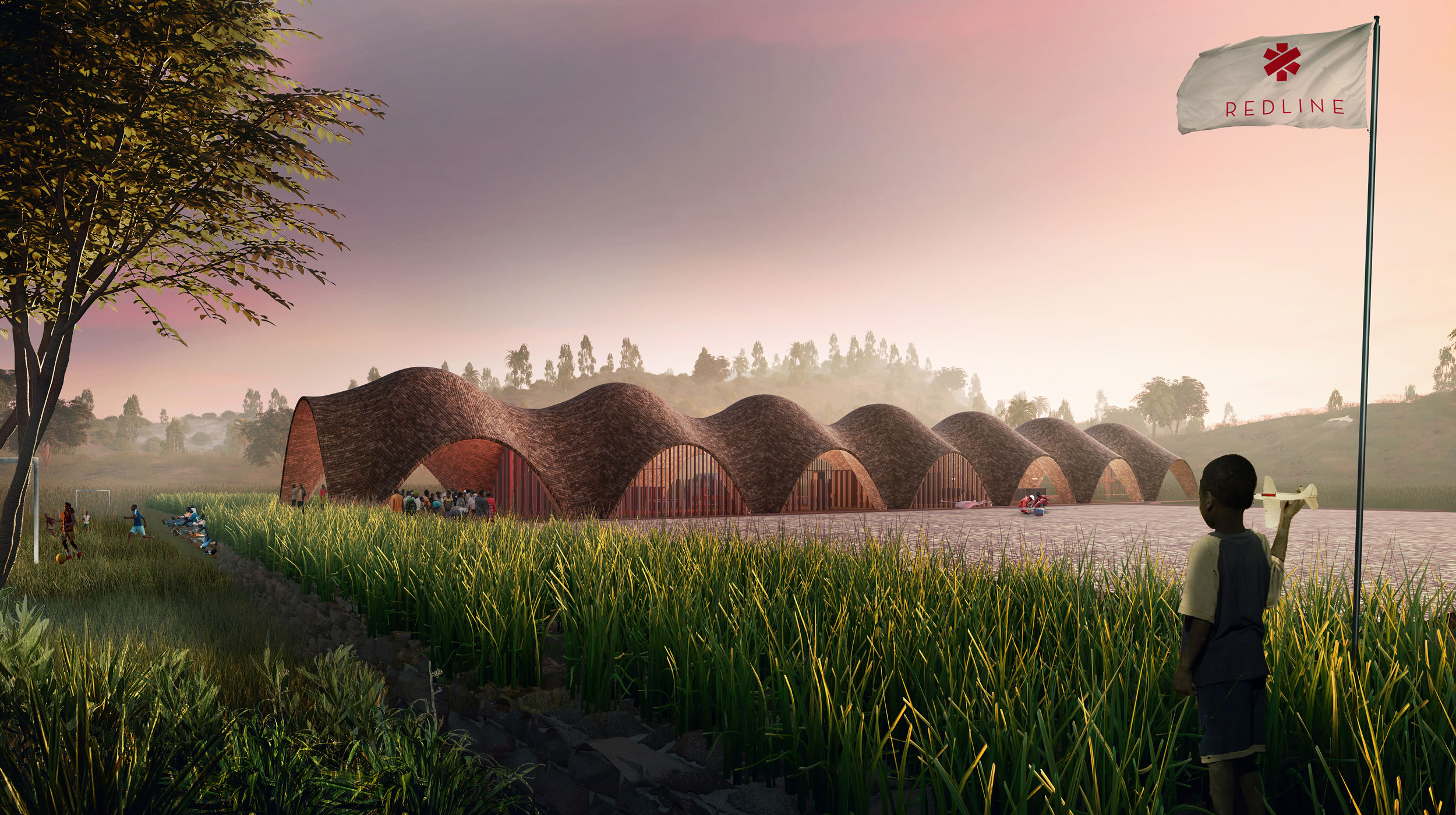
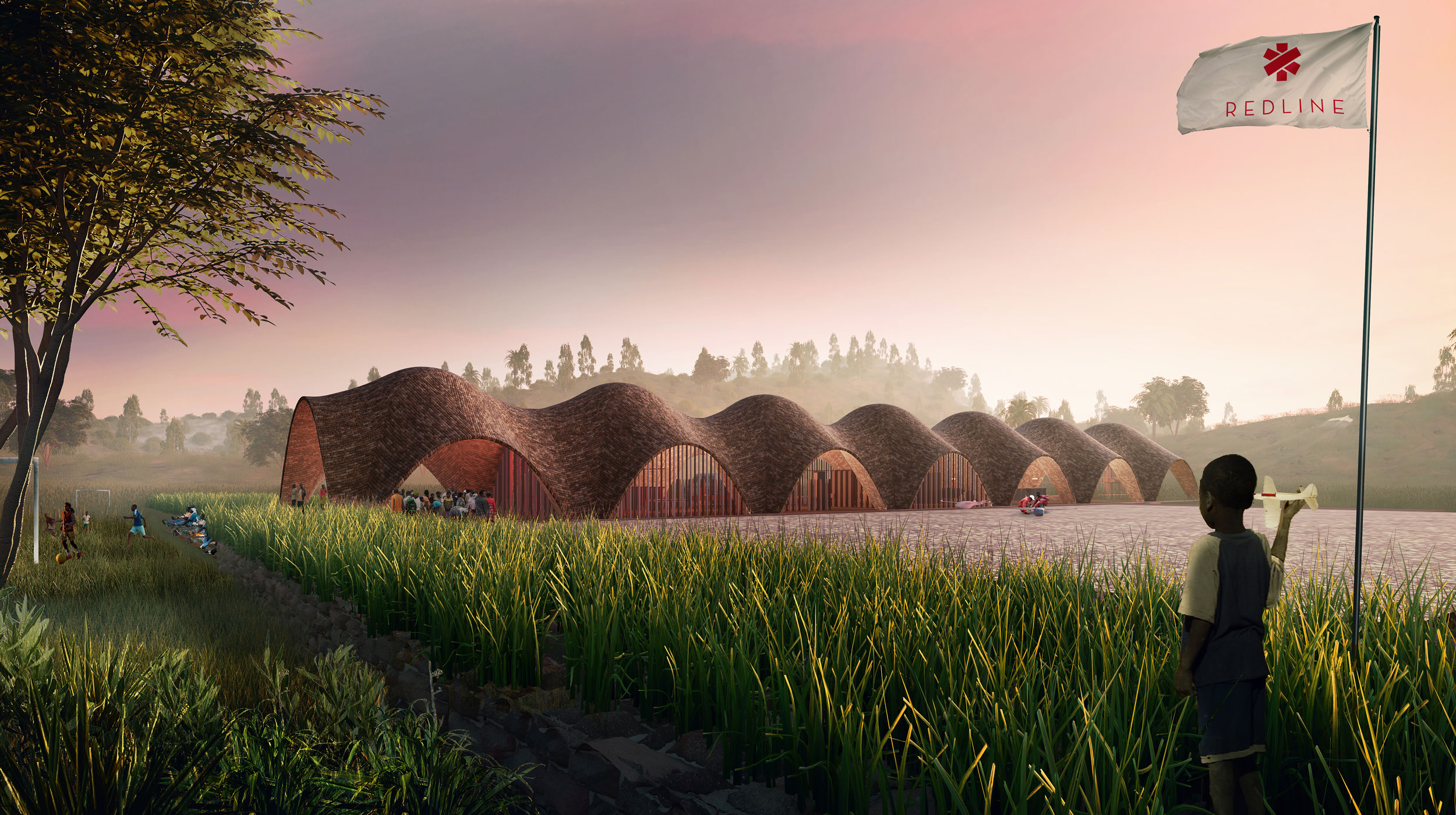
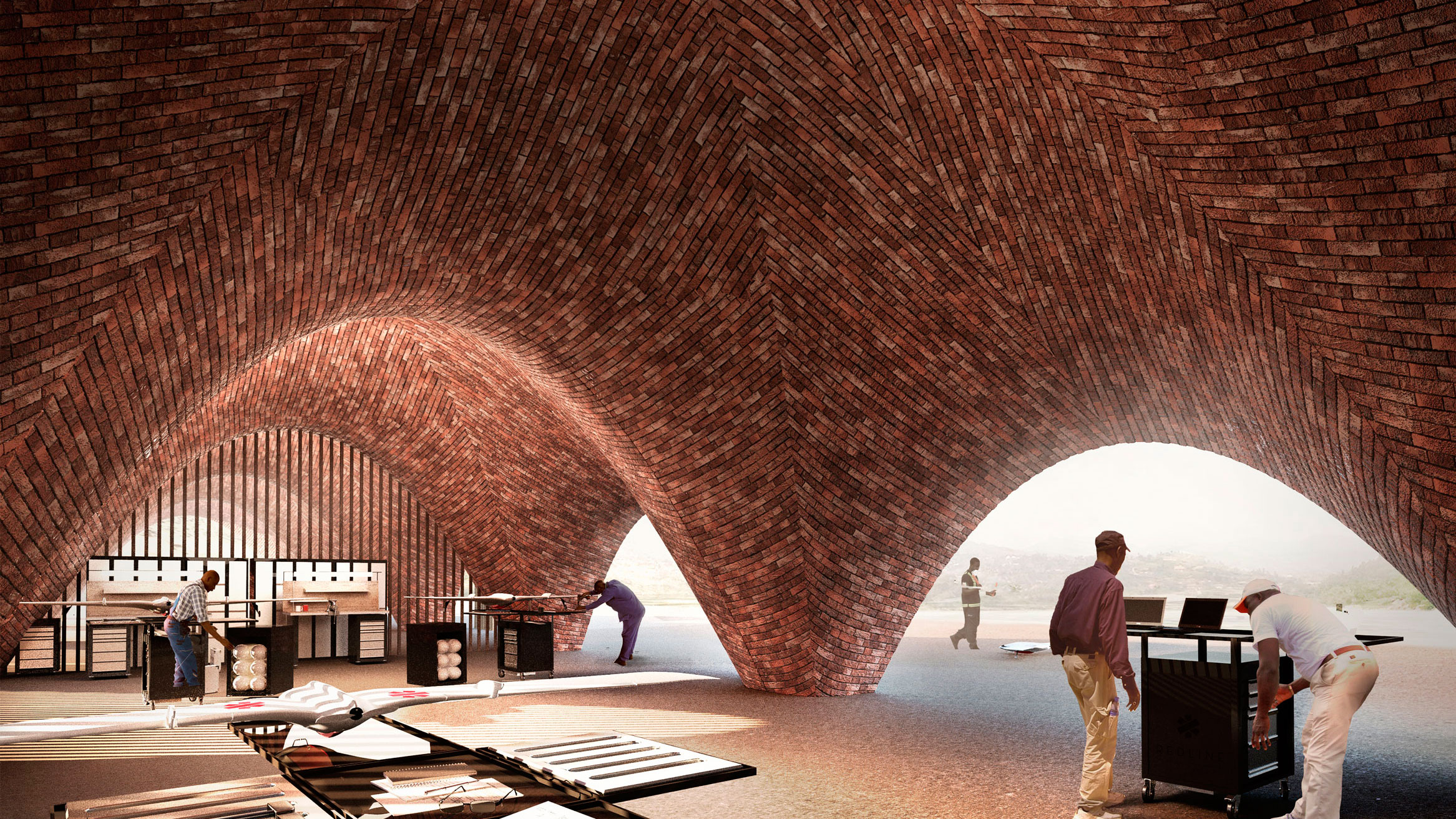
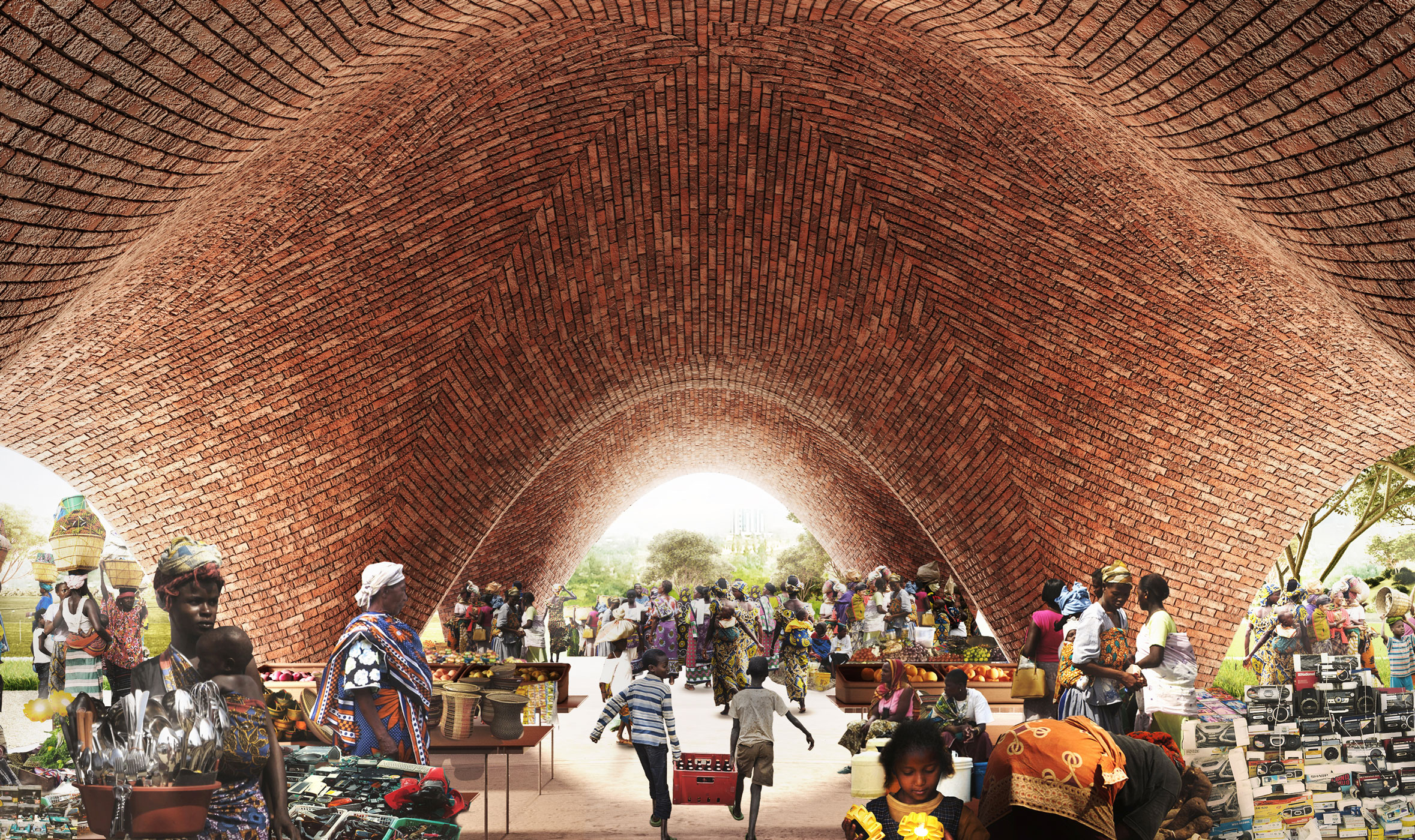
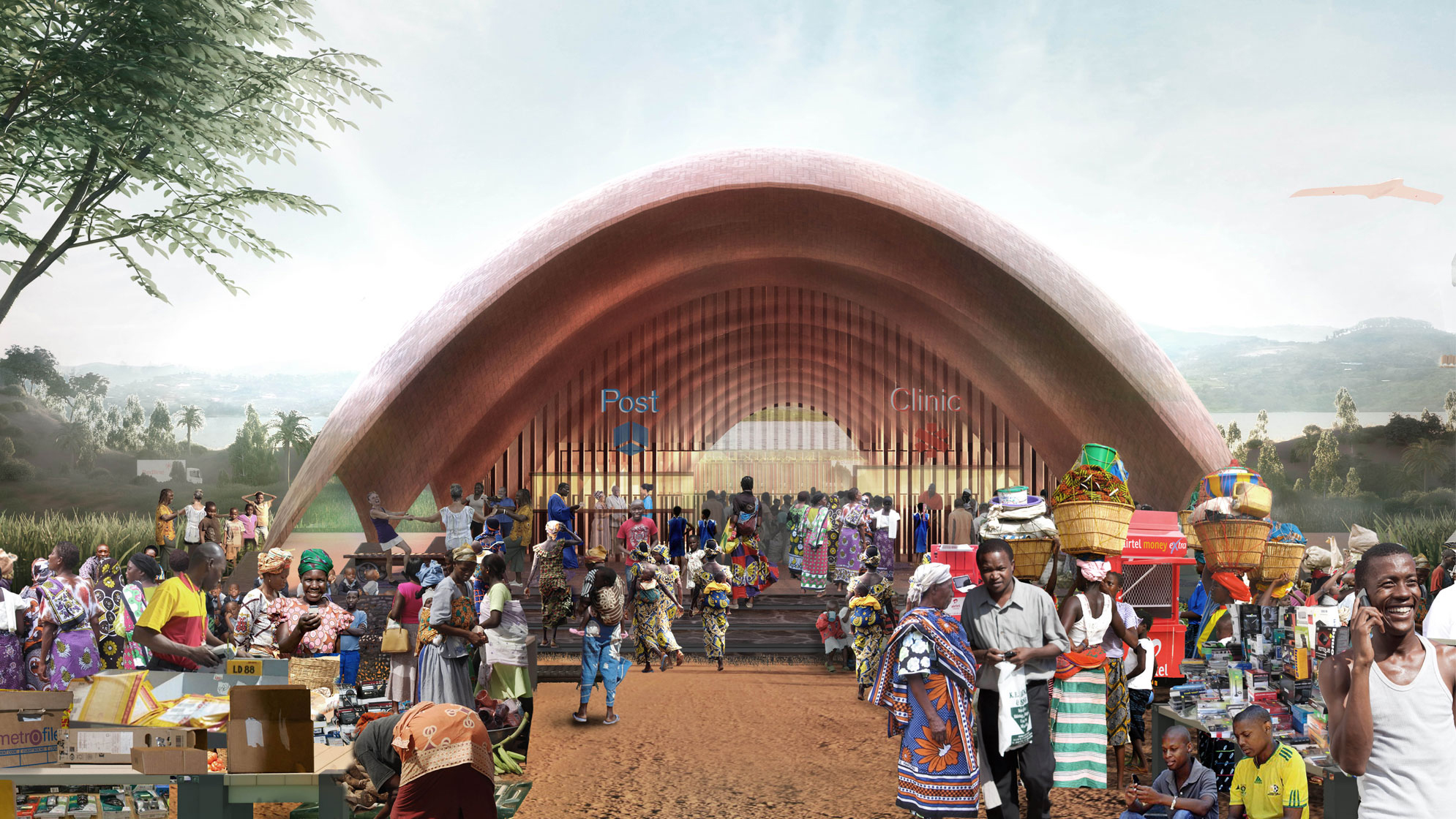
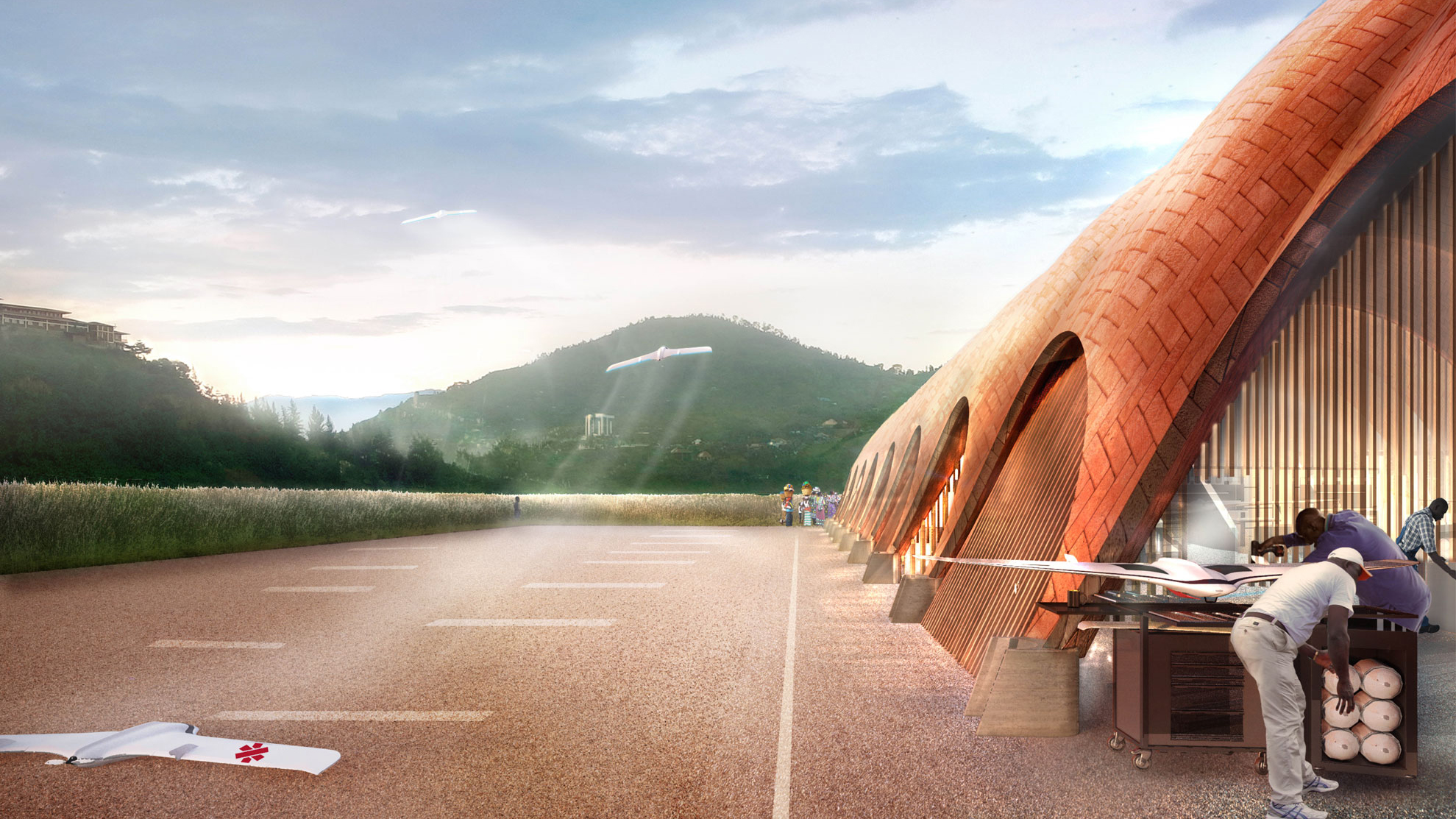
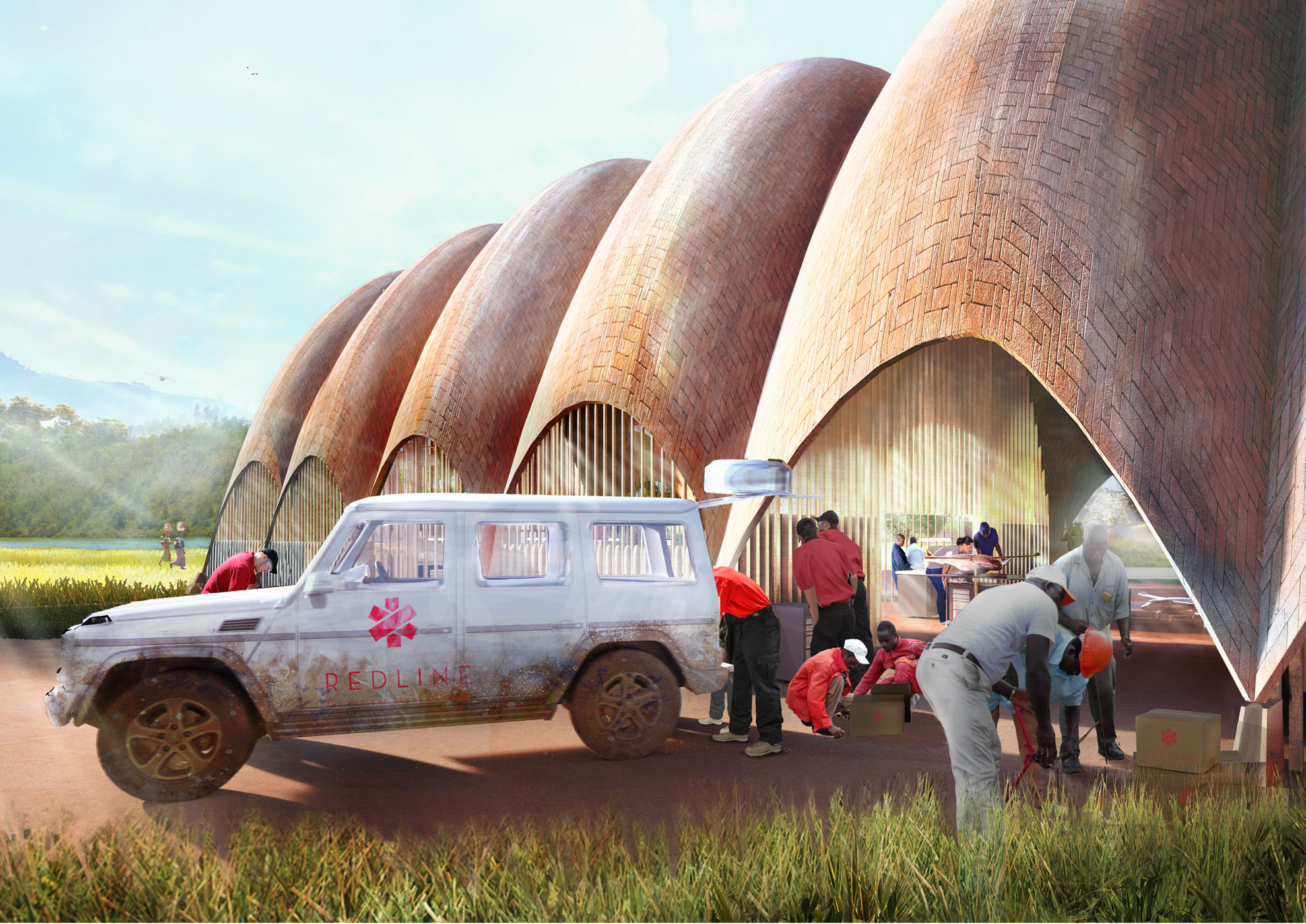
The government of Rwanda has committed a site and contributed funding for the pilot Droneport. The project offers a new typology of building which, it is envisaged, will grow into a ubiquitous presence in the future, much like petrol stations have become dispersed infrastructure for road traffic. The project has a strong sense of civic presence and is based on the use of knowledge-sharing platforms. It allows for safe landing of quiet drones in a densely populated area, and also includes a health clinic, a digital fabrication shop, a post and courier room, and an e-commerce trading hub, allowing it to become part of local community life.
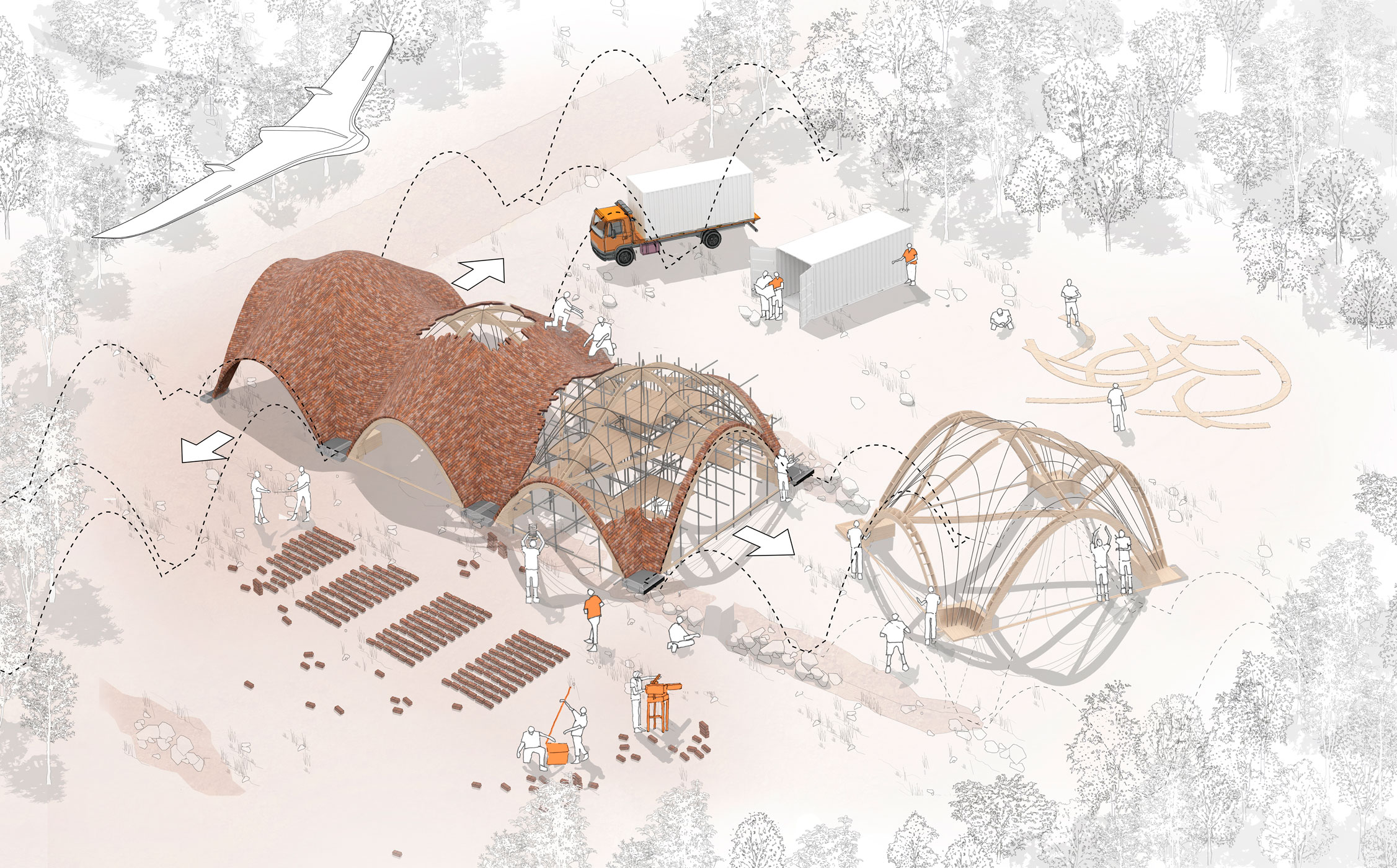
The project is an evolution of Norman Foster’s and his practices’ previous experience in building airports, as well as earlier lunar building studies conducted in association with the European Space Agency. Just as the structures designed for the moon use a minimal inflatable framework and 3-D printed lunar soil, the Droneport is imagined as a ‘kit of parts’ where only the basic formwork and brick-press machinery is delivered to site, and the raw materials, such as clay for bricks and boulders for the foundation, are locally sourced, reducing material transport costs and making it more sustainable. The central idea being to ‘do more with less’.
![]()